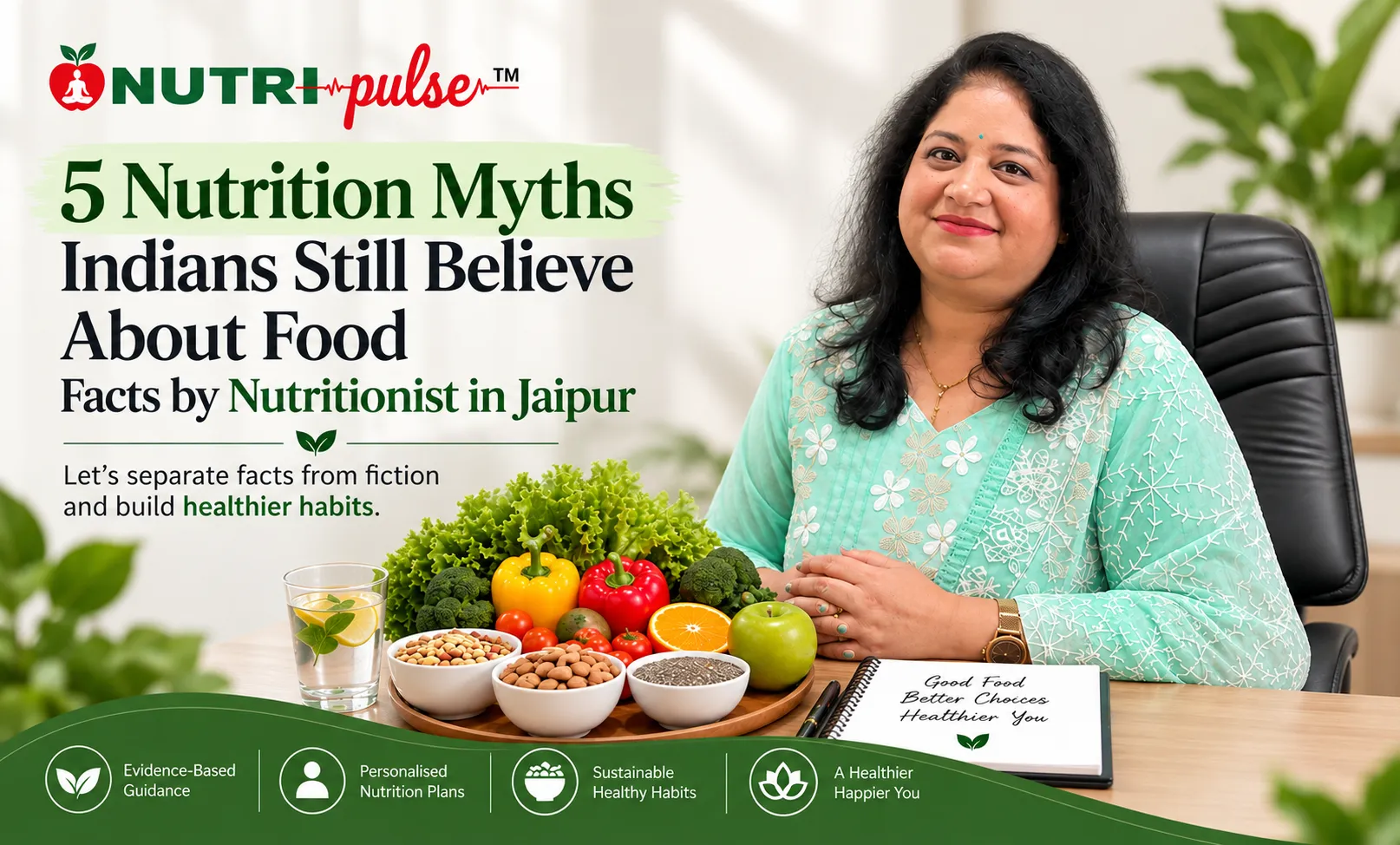
5 Nutrition Myths Indians Still Believe About Food - Facts by Nutritionist in Jaipur
Indian households have always valued food and nutrition, and many dietary practices have been passed down through generations. While some traditional food wisdom remains valuable, other beliefs may no longer align with current nutrition science. These misconceptions can influence everyday food choices, weight-management efforts, hormonal health, and overall wellness.
As a practicing Nutritionist in Jaipur, Dr. Anjali Phatak regularly encounters clients who follow food rules based on family advice, social media trends, or outdated assumptions. These beliefs are rarely rooted in ignorance. Most come from well-intentioned advice that has simply been repeated for years without being reassessed.
For individuals looking for a Certified Nutritionist, Nutrition Consultant, or professional guidance for weight management and women's health, understanding the difference between nutrition myths and evidence-based practices is an important first step.
Here are five common nutrition myths that continue to influence Indian eating habits and what a more balanced approach looks like.
Myth 1: "Ghee and Fat Make You Fat"
One of the most persistent beliefs in Indian diet culture is that eating fat automatically leads to weight gain. Because of this misconception, many people completely remove ghee, oils, nuts, and other sources of dietary fat when trying to lose weight.
However, dietary fat is an important part of a balanced diet. The body needs fats for several functions, including the absorption of fat-soluble vitamins and the maintenance of normal physiological processes.
A Holistic Nutritionist such as Dr. Anjali Phatak generally considers the overall dietary pattern rather than blaming one ingredient for weight gain. Ghee can be included in a balanced diet in appropriate quantities, depending on an individual's health status, energy requirements, and dietary pattern.
The Important Difference Is Quantity
Weight management is influenced by overall energy intake, food quality, physical activity, sleep, genetics, and several other factors. Simply removing one source of fat does not automatically guarantee weight loss.
Excessive consumption of any calorie-dense food can contribute to an energy surplus. Therefore, portion size and the overall diet matter.
Ghee also contains small amounts of naturally occurring compounds such as butyrate, while dietary fats help the body absorb vitamins A, D, E, and K.
For individuals trying to manage their weight, completely eliminating dietary fat may also make meals less satisfying.
Instead of following a "fat-free" approach, a Nutrition Consultant can help determine appropriate portions and sources of dietary fat according to individual nutritional requirements.
The focus should therefore be on balance and moderation rather than completely eliminating fat.
Myth 2: "Skipping Meals Speeds Up Weight Loss"
Skipping breakfast, lunch, or dinner is another common strategy used by people trying to lose weight. The idea is simple: fewer meals must mean fewer calories.
However, skipping meals does not automatically result in better weight-loss outcomes. What matters is the overall dietary pattern, nutritional adequacy, energy intake, hunger management, and consistency.
For someone working with a Dietician for Weight Loss, the focus is generally on creating an eating pattern that can be followed comfortably rather than relying on excessive restriction.
Why Meal Skipping Can Backfire?
For some individuals, long gaps without food can result in intense hunger later in the day. This may increase the likelihood of overeating or choosing highly processed, calorie-dense foods.
Skipping meals can also make it more difficult to consume enough protein, fibre, vitamins, and minerals throughout the day.
Rather than following rigid meal-timing rules, a personalized nutrition plan can help determine an eating schedule that fits an individual's routine and health goals.
What a Balanced Meal Can Include?
A balanced meal may contain:
- A protein source
- Fibre-rich vegetables
- Appropriate carbohydrates
- Healthy fats
- Adequate fluids
The exact combination and portion sizes depend on individual requirements.
At Nutripulse, a Weight Loss Dietitian Jaipur approach focuses on sustainable eating habits instead of encouraging people to starve themselves to achieve rapid results.
Myth 3: "Rice Is the Enemy of Weight Loss"
Rice has been a staple food in many Indian households for generations, yet it is often blamed for weight gain.
Many people completely remove rice from their diet when trying to lose weight and replace it with foods they consider "healthier." However, rice itself is not inherently responsible for weight gain.
Weight management depends on the overall diet, portion sizes, energy balance, food combinations, physical activity, and individual metabolic factors.
Rice Can Be Part of a Balanced Diet
Rice provides carbohydrates, which are an important source of energy.
The way rice is incorporated into a meal matters. Pairing rice with protein, vegetables, and other nutrient-dense foods can create a more balanced meal.
For example, a traditional Indian meal containing rice, dal, vegetables, and curd can provide carbohydrates, protein, fibre, and other nutrients.
A Best Nutritionist in Jaipur does not necessarily need to eliminate culturally familiar foods to create a healthy meal plan. Instead, the focus can be on appropriate portions and overall dietary balance.
What About Cooling Cooked Rice?
Cooking and subsequently cooling certain starchy foods can increase their resistant starch content. The extent of this effect can vary depending on cooking, cooling, storage, and reheating methods.
While this can be an interesting aspect of food science, it should not be viewed as a reason to eat unlimited rice.
Portion size and the overall composition of the meal remain important.
For individuals who enjoy rice, a personalized nutrition plan can demonstrate how it can fit into their dietary pattern while still supporting their health goals.
Myth 4: "Detox Drinks and Juices Cleanse the Body"
Detox drinks, juice cleanses, herbal teas, and restrictive cleansing diets have become increasingly popular on social media.
These products are often promoted with claims that they remove toxins, "reset" metabolism, or accelerate fat loss.
The human body already has sophisticated systems for processing and eliminating waste, particularly through organs such as the liver and kidneys. There is no need to rely on commercial detox drinks to perform these normal physiological functions.
Why Detox Diets Can Be Misleading?
Some detox programs involve very low calorie intake or replace regular meals with juices and beverages. Any short-term reduction on the weighing scale may partly reflect changes in water and glycogen stores rather than substantial body-fat loss.
Highly restrictive cleanses can also make it difficult to obtain sufficient protein, fibre, vitamins, and minerals.
A Clinical Nutritionist Jaipur can help individuals understand why sustainable nutrition is generally more valuable than short-term cleansing trends.
Supporting Overall Health Naturally
Instead of relying on detox products, healthy habits can support normal bodily functions:
- Eating a variety of whole foods
- Including vegetables and fruits
- Consuming adequate fibre
- Drinking enough water
- Getting sufficient sleep
- Staying physically active
- Limiting excessive alcohol and highly processed foods
There is no single drink that can replace these foundational habits.
Myth 5: "PCOS Needs a Completely Different Extreme Diet"
Women with PCOS are often exposed to conflicting dietary advice. Some recommendations suggest completely eliminating carbohydrates, while others promote extremely low-calorie diets or long lists of foods to avoid.
PCOS is a complex hormonal and metabolic condition, and there is no single diet that works identically for every woman.
A PCOS Dietitian Jaipur approach focuses on individual nutritional requirements rather than imposing extreme restrictions.
What Can a Balanced PCOS Eating Pattern Include?
Depending on individual requirements, nutrition strategies may emphasize:
- Adequate protein
- Fibre-rich foods
- Whole grains
- Vegetables
- Fruits
- Healthy fats
- Balanced carbohydrate portions
- Regular eating patterns
The appropriate approach can differ according to body composition, insulin sensitivity, medical history, lifestyle, food preferences, and health goals.
Why Extreme Diets Can Be Difficult?
Highly restrictive diets may be difficult to maintain and can make social eating, family meals, and everyday life unnecessarily complicated.
A personalized approach aims to help women build sustainable habits rather than temporarily follow a strict list of forbidden foods.
For women managing PCOS, nutrition should be considered alongside appropriate medical care, physical activity, sleep, and stress management.
Why Working With the Right Best Nutritionist in Jaipur Matters?
Nutrition advice is available everywhere, from social media posts and online videos to family recommendations and celebrity diets. However, general advice cannot account for every individual's health history and nutritional requirements.
A diet that works for one person may not be appropriate for another.
Someone trying to lose weight may have different nutritional needs from a person managing PCOS. Similarly, someone with diabetes, thyroid concerns, digestive problems, or another medical condition may require a more specific approach.
This is where professional nutrition counselling can provide value.
A qualified Best Nutritionist in Jaipur can consider factors such as:
- Lifestyle
- Eating habits
- Physical activity
- Health goals
- Medical history
- Food preferences
- Nutritional deficiencies
- Existing health conditions
At Nutripulse, Dr. Anjali Phatak focuses on personalized and practical nutrition guidance designed around real Indian food habits and everyday lifestyles.
The goal is not to create unnecessary food restrictions. It is to help individuals understand what their bodies need and develop habits they can realistically maintain.
Personalized Nutrition Instead of Fad Diets
One of the biggest limitations of generic diet plans is that they often assume everyone has the same nutritional requirements.
Personalized nutrition takes a different approach.
A Certified Nutritionist can help assess an individual's needs and develop recommendations around their specific goals.
For example, a personalized plan may take into account:
Weight Management
A Weight Loss Dietitian Jaipur can help create sustainable strategies for healthy weight management rather than relying on extreme calorie restriction.
Women's Health
A PCOS Dietitian Jaipur can develop nutrition strategies according to individual PCOS symptoms and metabolic health.
Medical Nutrition
A Clinical Nutritionist Jaipur can provide nutrition guidance for individuals who require dietary support alongside medical treatment.
Overall Wellness
A Holistic Nutritionist can consider nutrition together with lifestyle factors such as sleep, stress, physical activity, and daily routines.
About Dr. Anjali Phatak - Best Nutritionist in Jaipur
Dr. Anjali Phatak is a nutrition professional associated with Nutripulse in Jaipur. Her approach to nutrition focuses on personalized, evidence-based guidance rather than restrictive fad diets.
As a Nutritionist in Jaipur, Dr. Phatak works with individuals looking to improve their eating habits, manage their weight, support women's health, and address lifestyle-related nutritional concerns.
Her approach emphasizes practical changes that can work within Indian food culture and everyday routines.
Rather than encouraging clients to completely eliminate familiar foods, the focus is on understanding portions, food combinations, nutritional quality, consistency, and individual requirements.
Consult the Best Nutritionist in Jaipur at Nutripulse
Nutrition myths can influence everyday food choices for years, especially when they are repeatedly shared by family, friends, influencers, and online communities. However, healthy eating does not need to involve fear, extreme restrictions, or eliminating familiar Indian foods.
Ghee does not automatically cause weight gain. Rice is not inherently the enemy of weight loss. Skipping meals is not a guaranteed shortcut to a healthier body, and detox drinks cannot replace the body's natural physiological processes.
Similarly, women with PCOS do not necessarily need to follow extreme diets or eliminate entire food groups.
The most effective nutrition strategy is one that considers the individual.
For people seeking support with weight management, women's health, clinical nutrition, or overall wellness, consulting a qualified professional can help replace confusing food rules with practical, evidence-based guidance.
At Nutripulse, Dr. Anjali Phatak provides personalized nutrition guidance designed around individual needs and real-life Indian eating habits. Whether someone is looking for a Nutritionist in Jaipur, Best Dietitian in Jaipur, Certified Nutritionist, Nutrition Consultant, Dietician for Weight Loss, or PCOS Dietitian Jaipur, the focus remains on building sustainable habits rather than following temporary trends.
FAQs about Nutritionist in Jaipur
Q1. How can someone know whether they need a nutritionist or dietitian?
A professional nutrition consultation can be useful for individuals seeking support with healthy eating, weight management, lifestyle changes, or specific nutritional concerns. Someone looking for a Clinical Nutritionist Jaipur may particularly benefit from professional guidance when managing a health condition alongside medical care.
Q2. Can a Dietician for Weight Loss help with sustainable weight management?
Yes. A professional Dietician for Weight Loss can create a personalized eating strategy based on an individual's lifestyle, nutritional needs, health goals, and food preferences. The emphasis should be on sustainable habits rather than crash dieting.
Q3. Is ghee allowed during weight loss?
Ghee can be included in a balanced diet when consumed in appropriate quantities. The right amount depends on an individual's overall dietary pattern, energy requirements, and health goals. A Nutrition Consultant can provide personalized guidance.
Q4. Does eating rice automatically cause weight gain?
No. Rice is a carbohydrate-containing staple food and can be part of a balanced diet. Overall portion size, meal composition, total energy intake, and lifestyle are more important considerations than labeling rice as inherently unhealthy.
Q5. Are detox drinks necessary for cleansing the body?
No special detox drink is required for the body's normal waste-removal processes. The liver and kidneys perform important roles in processing and eliminating waste. A balanced diet, hydration, adequate sleep, and regular physical activity are more meaningful components of overall health.
Q6. What does a PCOS-friendly diet involve?
A PCOS-friendly eating pattern is individualized. A PCOS Dietitian Jaipur may focus on adequate protein, fibre-rich foods, balanced carbohydrate portions, healthy fats, and sustainable meal patterns according to the individual's health needs.
Q7. Can traditional Indian food be included in a weight-loss plan?
Yes. Traditional Indian foods can often be incorporated into a balanced nutrition plan. A Best Nutritionist in Jaipur can help modify portions, food combinations, and preparation methods according to individual requirements.
Q8. Why is personalized nutrition important?
Personalized nutrition considers individual differences in lifestyle, health, activity levels, food preferences, medical history, and goals. This can make a nutrition plan more practical and sustainable than a generic diet chart.